
PRODUCTS / INTERPOLATION UNITS
Interpolation Units
A concise positioning line about ready-to-use
interpolation electronics.
READY-TO-USE ELECTRONICS
SYSTEM INTEGRATION
POSITION & ANGLE MEASUREMENT
UNIT PORTFOLIO
Find the right Unit interpolation.
Compare the available AMAC unit interpolation by their key technical characteristics.
|
Parameter |
IPE40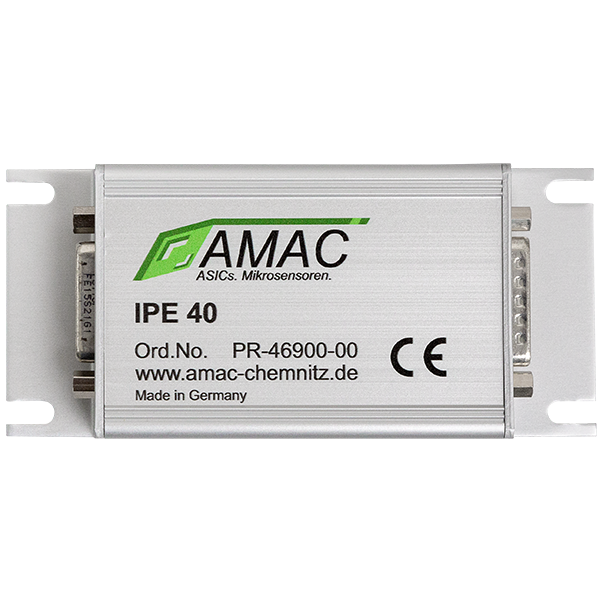 |
IPE201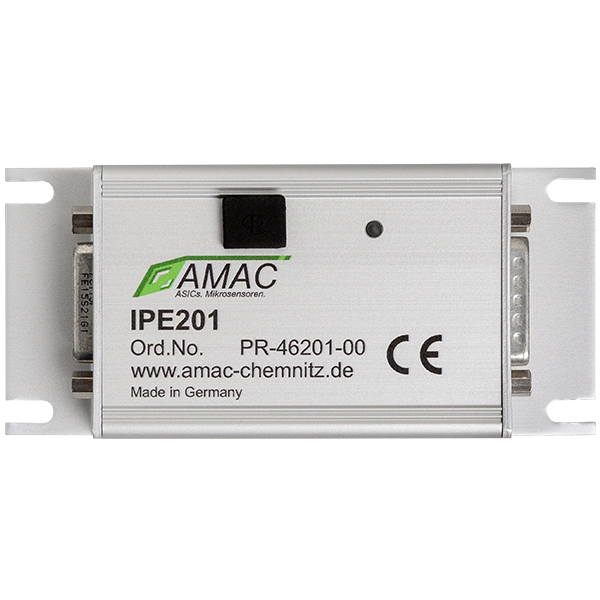 |
AM-IPE4k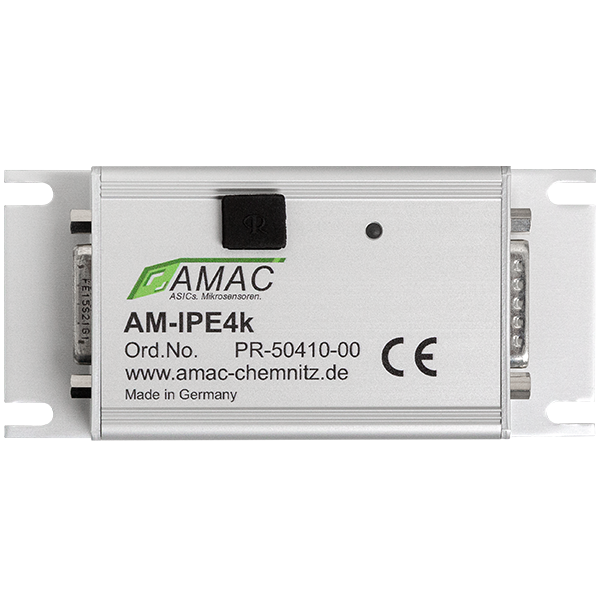 |
AM-IPE-Nonius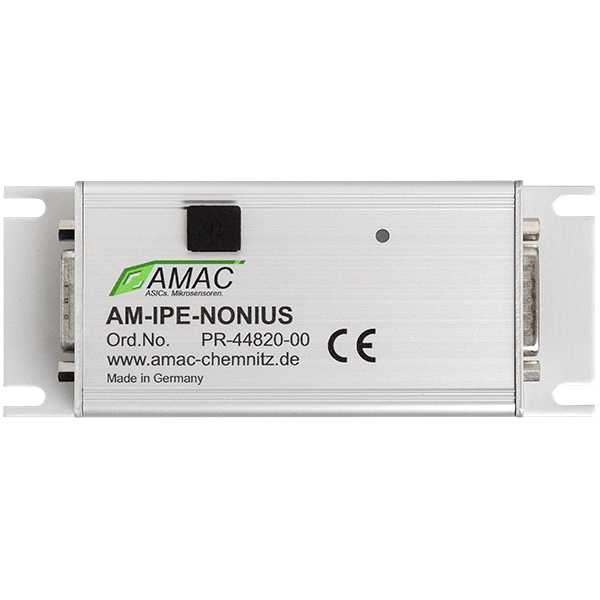 |
IPE32000 |
|---|---|---|---|---|---|
|
Interpolation IC |
GC-AIP40 |
GC-IP201 |
AM-IP4k |
GC-NIP |
|
|
Interpolation rate |
4–40 |
20–256 |
4–4096 |
256–8192 |
|
|
Power supply |
5 V |
5 V |
5 V |
5 V |
|
|
Analog input |
– 3 channels: sine / cosine / reference (index) |
– 3 channels: sine / cosine / reference (index) |
– 3 channels: sine / cosine / reference (index) |
– 6 channels: sine / cosine / reference (index) |
|
|
Input signal range (differential) |
60 mVpp–1.2 Vpp |
0.08 Vpp–1.2 Vpp |
0.075 Vpp–1.2 Vpp |
0.036 Vpp–0.8 Vpp |
|
|
Input frequency |
Up to 1.2 MHz |
Up to 440 kHz |
Up to 220 kHz |
Up to 130 kHz |
|
|
Signal correction |
Noise reduction with programmable digital and analog hysteresis |
AMAC-specific gain and offset control. |
AMAC-specific gain and offset control. |
AMAC-specific gain and offset control. |
|
|
Outputs / interfaces |
ABZ (<1.2 MHz) |
– ABZ / LVTTL (<40 MHz) |
– ABZ / LVTTL (<40 MHz) |
– ABZ / LVTTL (<23 MHz) |
|
|
Connectors |
Sub15-D, 15-pin |
– mini-USB |
– mini-USB |
– mini-USB |
|
|
Configuration options |
– Via switches |
Via software |
Via software |
Via software |
|
|
Temperature range |
-40°C to +120°C |
-40°C to +85°C |
-40°C to +85°C |
-40°C to +85°C |
|
|
Housing |
– 55 × 80 × 20 mm |
– 55 × 80 × 20 mm |
– 55 × 80 × 20 mm |
– 55 × 100 × 24 mm |
|

SYSTEM INTEGRATION
Ready-to-use interpolation for existing measurement systems.
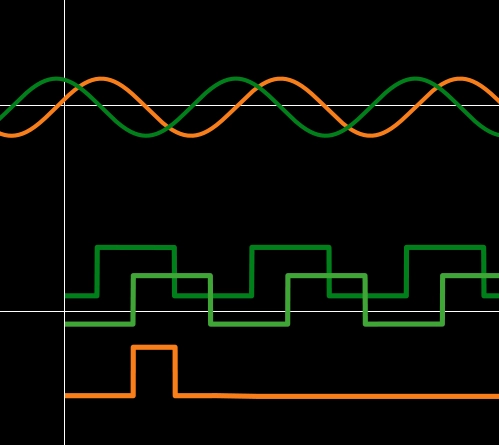
AMAC interpolation units provide packaged interpolation electronics for connecting distance and angle measuring systems. Depending on the selected unit, signal inputs, interfaces and configuration options support different integration requirements. The brochure explicitly positions this family as ready-to-use units for connecting distance and angle measuring systems.
1. Sensor connection
Sine/cosine and reference inputs, with input ranges and channel configurations depending on the unit.
2. Interfaces & outputs
Product-dependent outputs include ABZ and serial interfaces such as SPI, SSI and BiSS, together with monitor and error outputs where available.
3. Configuration & installation
Depending on the unit, configuration is handled via software or hardware controls, with packaged housings and external connectors for system integration.
Available functions and interfaces depend on the selected interpolation unit.
APPLICATIONS
Built for precision measurement and positioning systems.
AMAC interpolation units are designed for integration into distance and angle measuring systems across industrial measurement, motion and machine applications.
Motion & Drive Systems
For precise position feedback in drives, motors, control systems and robotic handling applications.
Measurement Systems
For angle, distance and dimensional measurement where higher-resolution position information is required.
Industrial Equipment
For machines and equipment requiring accurate position feedback and interpolation.
DOWNLOADS
Technical documentation.
Access product documentation for AMAC interpolation units.
IPE40
AM-IPE4k
IPE32000
Coming soon ↓
Need additional technical documentation?
NEED HELP SELECTING AN INTERPOLATION UNIT?
Find the right unit for your measurement system.
Talk to AMAC about signal range, interpolation requirements, interfaces, connectors and system integration.